Part-time scientist, part-time crafting connoisseur.

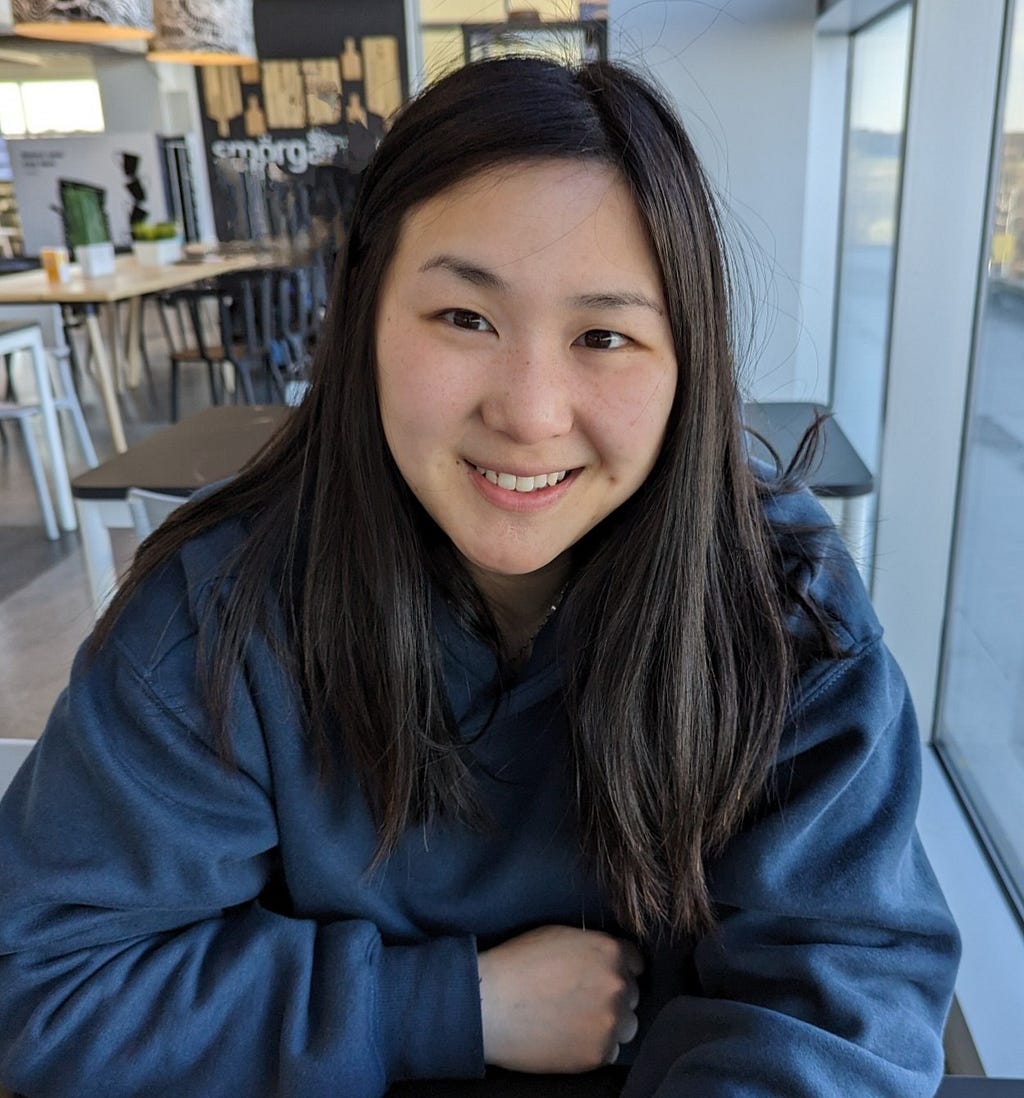
This week’s Community Feature (formerly part of our #WomanCrushWednesday in STEM or #WCWinSTEM campaign) highlights Michelle Hoang, a lab technician driven by a love for learning and asking complex scientific questions. As the child of Southeast Asian immigrants, she brings a perspective shaped by resilience, self-discovery, and a deep commitment to learning on her own terms. Whether she’s knitting, crocheting, or designing experiments, creativity is woven into everything she does. Michelle sees little difference between the creativity and problem-solving required to master a new stitch and the curiosity needed to tackle complex scientific questions. She is carving out her own space in science — one driven by wonder, creativity, and a genuine desire to contribute something meaningful to the world of medicine.
Responses may be edited for clarity and brevity.
Where did you go to school?
University of Maryland, Baltimore County (B.S. Biochemistry and Molecular Biology)

What do you do right now?
I currently work as a lab technician studying how heart cells function and how changes in their function can lead to heart rhythm disorders, such as Long QT syndrome.
As a lab technician, I support ongoing research by preparing samples for experiments, maintaining lab equipment, and ensuring supplies are stocked and organized. I also help carry out experiments and get to work on some of my own projects. My current research focuses on understanding how genetic mutations affect the movement of proteins — called potassium ion channels — that control electrical signals in heart cells. Disruptions to these channels can cause dangerous heart rhythms, so understanding what goes wrong at the cellular level could potentially inform how we think about treating genetic conditions like Long QT Syndrome.
What’s your favorite aspect of your current role?
I love that my job is never stagnant. Each month is different from the last, and there is always something new to learn or explore. I love knowing that the results of my work will provide new perspectives or information in the world of medicine.

I also love that I’m able to learn at my own pace without feeling pressured to know everything all the time. The motivation to learn feels natural because it comes from a genuine desire to use new ideas to solve real problems.
What made you choose your STEM discipline in the first place?
I originally wanted to go into patient care, which was the path I was pursuing before getting involved in research. During my undergraduate studies, my Immunology and Biomedicinal Chemistry professors completely changed the way I viewed learning. They taught their courses in a way that showed me how much creativity and problem-solving can be used in research. That experience made me realize how fun it is to use what I learned to explore unanswered questions and develop new ideas. Over time, I found myself drawn more toward the discovery side of medicine.
What piece of work are you most proud of (publication, presentation, project, etc.)?
While I don’t have a specific presentation or paper to share, I am very proud of the work I did to learn flow cytometry — a technique I had no previous knowledge of. I used flow cytometry to detect the levels of potassium channels at the cell’s surface. This experience was meaningful because I spent a lot of time watching videos and online seminars on how to perform the experiments, present, and interpret the results from the experiment.
While the project hit a dead end, it was the work I put in to learn the technique that I am particularly proud of. Each time I presented and graphed my findings, I felt like I found my space in science.
What’s one piece of advice you wish you had when you started your STEM journey?
Enjoy the process of learning, don’t let the fear of failure define what you do, and do things your own way…at your own pace.
How did you find support within your institution or field?
My partner, friends, and lab community have been my greatest sources of support throughout this journey. While self-confidence has sometimes been a challenge for me, my partner, Andrew, has continually encouraged me to push through discomfort and uncertainty in order to grow and succeed. My friends, Danielle and Emily, make sure to constantly remind me that I belong in the position I’m in today. They’ve encouraged me to recognize the hard work and dedication I’ve invested in both my work and myself, rather than downplaying my accomplishments.

What do you think the field can do to make STEM more equitable?
In my experience, a lot of early STEM and research opportunities weren’t openly talked about, and I didn’t learn about many of them until near the end of my degree. By the time I graduated, I felt like I had very little research experience because many lab opportunities seemed to spread through word of mouth, and some students were recruited privately before others even knew positions existed. I also didn’t learn about outside research opportunities until the end of my degree, and many of them were looking for students with prior experience.
I think students would feel much more prepared if professors and universities did a better job promoting research opportunities and making them easier for everyone to find and access.
What else are you passionate about?
I really enjoy knitting and crocheting. I learned how to crochet about 8 years ago when I was in high school. I haven’t had time to enjoy it until recently. I also learned how to knit recently after meeting people at a craft club I’ve been going to regularly for the past few month. They help me to improve my technique and provide me with feedback on my craft projects.
Crocheting and knitting have become something I genuinely enjoy, especially during small moments of downtime at work or while relaxing at night. I hope to continue learning and eventually master other forms of fiber arts before I reach retirement.

Lately, I’ve been making an effort to get back into sports and stay active. I’ve returned to playing tennis, which I enjoyed in high school, and have also been spending time playing pickleball, volleyball, and badminton. In addition, I recently started running to improve my endurance.
I’ve always been a nature kind of person too! Nature-related activities, including hiking, gardening, climbing, traveling, and, kite-flying are things I dabble in. I’d love to do these activities more often, but right now it’s a bigger investment in both time and money than I can fully commit to.

Are there other axes of identity that impact your life/STEM experience that you’d like to speak to (e.g. your religion, ability status, neurodiversity, etc.)? How do these additional axes of identity impact you as a woman/non-binary of color in STEM?
I think as a child of a Southeast Asian immigrant you learn to become independent with things like cooking, cleaning, and making money, but I wasn’t taught other crucial life skills like how to file taxes, financial literacy, and work life balance. I wasn’t taught how to navigate life’s trials and tribulations or emotional intelligence. When I got to college, I realized the importance of these skills, and it took a tumultuous journey to understand myself and what I needed to succeed.

I have managed to teach myself what seemed like basic things, like how to put my pride aside when I need to ask for help. However, I still have many things to teach myself.
I’m currently working on learning how to celebrate my achievements and to not downplay what I’ve done or been through. I am trying to change the “this is what you needed to do” and “this is what is expected of you” into “look what you’ve done so far!” and “you’re on your way to better things for yourself” self-talk.
Another major impact on me was the suffocating expectations of others. I am Vietnamese, and in my culture, family relationships are incredibly close. There is often a strong expectation to uphold your family’s opinions and reputation in high regard. Growing up, I was expected to follow the career path my family desired for me, focusing only on academics and achieving a high-paying job. At the same time, I was expected to figure out how to achieve those goals largely on my own, since previous generations in my family had not navigated that path before.

That pressure weighed on me for years and kept me from fully enjoying life or exploring who I was outside of those expectations. Since living on my own, I’ve started prioritizing the small things that bring me joy and fulfillment on a daily basis instead of waiting until after I accomplish major goals. Those small daily joys have changed my perspective on my path in STEM and ultimately redirected me toward research — a field that allows me to explore ideas creatively, think independently, and pursue questions that genuinely interest me.

Is there anything else you’d like us to know about you?
I love cats. Kimchi was my beloved cat through my late teens and early twenties. She was a steady presence when everything around me was changing. I miss her dearly.
You can find Michelle Hoang on Instagram (@mixalixin).
Thank you, Michelle, for allowing us to share your story! We’re honored to have you in our VanguardSTEM Village!
If you enjoy our weekly Community features, consider donating to our parent not-for-profit, Mo-saiq LLC, to help support this work.
Community Features: Michelle Hoang, B.S. (she/her) was originally published in VanguardSTEM Conversations on Medium, where people are continuing the conversation by highlighting and responding to this story.