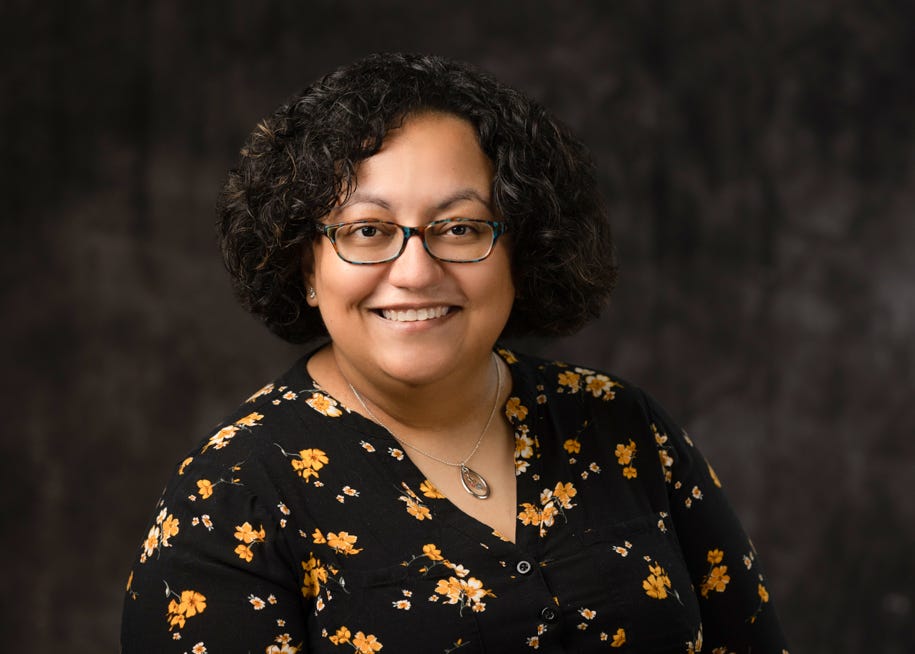
A Disabled Latina mother-scholar dedicated to fighting systems of oppression, humanizing STEM and fostering embodied contemplative practices.

This week’s Community Feature (formerly part of our #WomanCrushWednesday in STEM or #WCWinSTEM campaign) highlights Dr. Lisette Torres-Gerald, a Senior Researcher dedicated to advancing inclusivity for disabled and Latina individuals in STEM. Her research focuses on dismantling ableism in STEM aiming to raise awareness around issues of racialized gender justice and disability within science and higher education.
Responses may be edited for clarity and brevity.
Where did you go to school?
- Iowa State University (Ph.D. in Education with a Certificate in Social Justice) Thesis: “Speaking truth to power and to the people”: Scientist bloggers of color as public intellectuals
- Miami University (M.S. Zoology with a Certificate in Ecology)
- Lehigh University (B.A. Earth and Environmental Science and Religion Studies)
What do you do right now and what do you do in this role?
I am a Senior Researcher at TERC, a math and science education non-profit organization. TERC aims to improve education by creating better teaching tools, helping teachers grow in their profession and using new technology to make learning more accessible and effective for everyone.
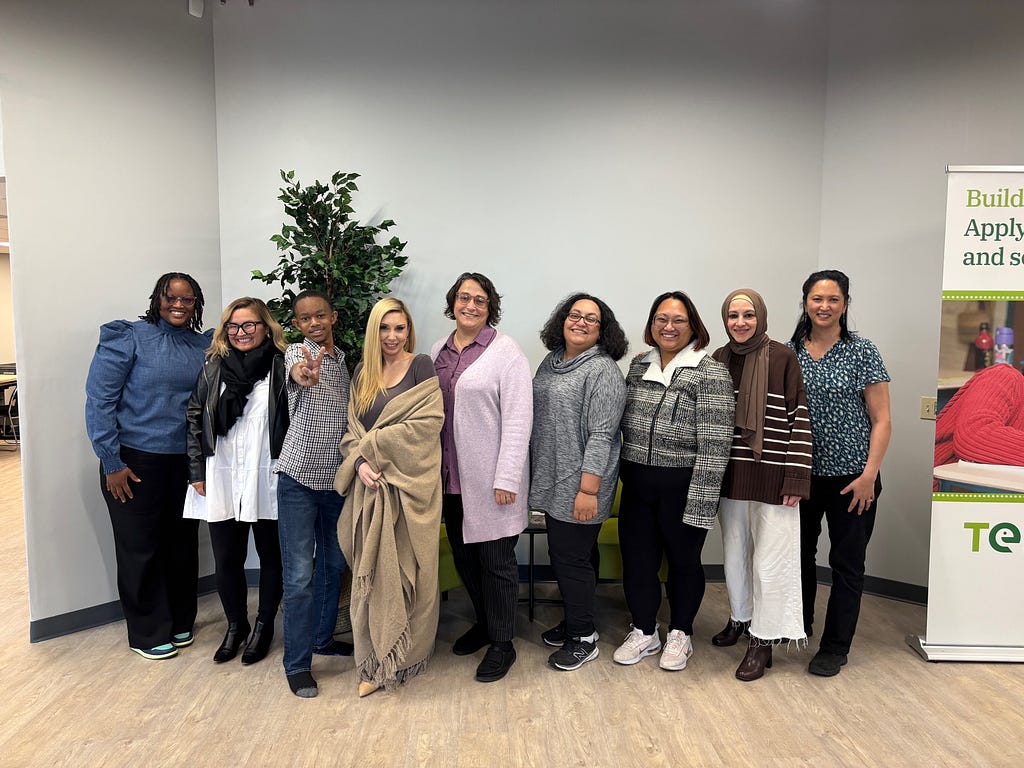
I have the honor of working on a team of women of color led by Dr. Mia Ong. My research interests focus on race, gender and disability in STEM and education, with the goal of improving inclusive science communication and raising awareness of intersectionality in STEM and education.
How did you end up in your current role? What part(s) of your journey was influential in leading you to your current role?
I was trained as a scientist who studies aquatic ecosystems, where I first researched how tiny animals called zooplankton move up and down in the water each day and later, how animals help recycle nutrients in these environments.
I decided to leave my sub-discipline all-but-dissertation because of racialized gendered inequities that resulted in racial battle fatigue and trauma.
After some deep reflection, I began to take courses in higher education and transferred to a student affairs program thinking that I would get a second Masters degree to run STEM transition programs. My advisor (Dr. Mark Giles) and a visiting faculty member (Dr. Riyad Shahjahan), both men of color, were persistent in trying to get me to pursue a doctorate and eventually convinced me to apply to Iowa State. There, my advisor, who is a woman of color (Dr. Nana Osei-Kofi), allowed me to continue to critically examine STEM educational spaces and taught me about critical theoretical frameworks and arts-based research methodologies. These experiences were instrumental in leading me to my current role as a Senior Researcher at TERC, where I feel blessed to work alongside a team of like-minded women of color.
What is your favorite aspect of your current role?
My favorite part of the job is being able to work with several brilliant people committed to diversity, equity, inclusion and access.
I feel supported, seen and valued. It is nice to work in an environment where people value my contributions and are invested in my success.
I also love that I get to work on interesting research projects that aim to transform STEM education.
What made you choose your STEM discipline in the first place?
I have always loved animals and nature. When I was around 4 years old, I would feed the ants at the bottom of our back steps with crumbs of bread. I would watch for hours as they scrambled and coordinated lines to bring the food back to their home. As I grew older, I learned about science through the Discovery Channel. I was particularly a fan of the David Attenborough documentaries and Shark Week. However, the person who inspired me to become an ecologist was Steve Irwin, the Crocodile Hunter. He was so enthusiastic about his work, but what I really loved about him was his humility and gentleness when working with animals. He had a deep sense of respect for the environment and all of its inhabitants, which I truly admired.
What piece of work are you most proud of (publication, presentation, project, etc.)?
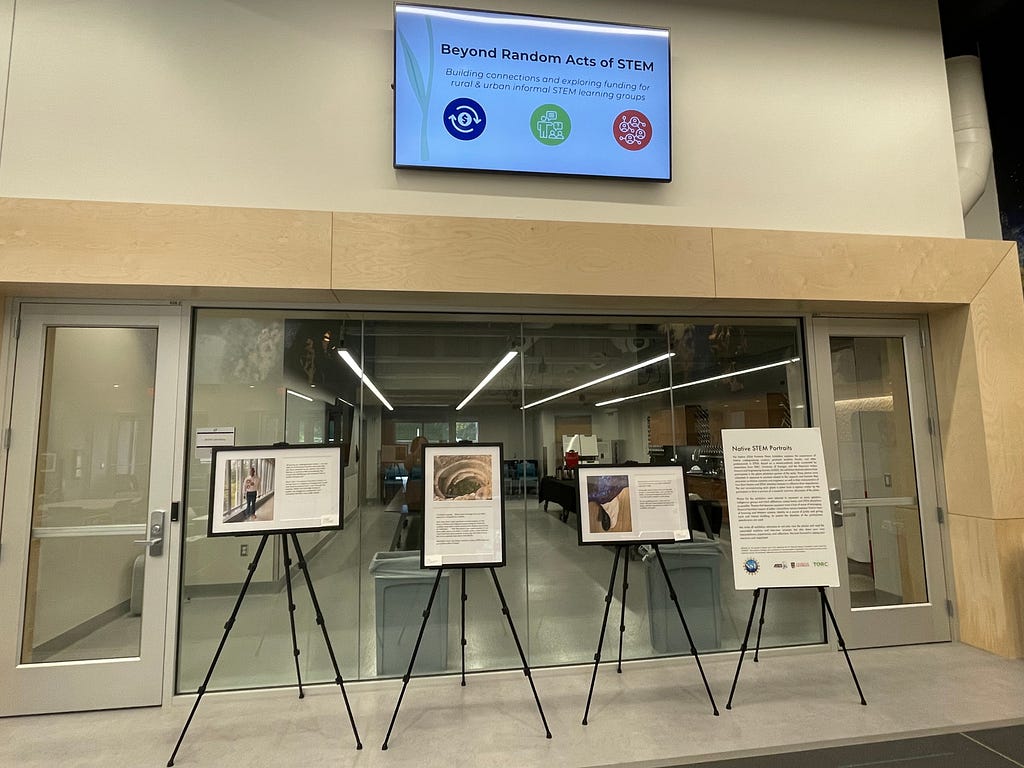
I am incredibly proud of my research team’s Native STEM Portraits project, which was a mixed-methods study on the experiences of Native undergraduate students, graduate students and professionals in STEM. For the qualitative portion of the study, we used a visual narrative method to have participants share the supports and barriers they have experienced in STEM as well as how they see their Native identities intersecting with their STEM identities.
Participants honored us with their stories and images, many of which can be found on our Native STEM Portraits website — https://www.terc.edu/nativestemportraits/online-gallery.
Unfortunately, this project was terminated during the federal grant terminations by the Trump Administration.
I am also excited about my pilot project on a new methodology I am calling Contemplative CRiT Collage. The aim of this approach is to help graduate students of color with disabilities with mending from traumatic experiences in STEM and support their persistence in STEM.
Lastly, my friend, Dr. Daniel Reinholz from San Diego State University, and I have created a website, Sines of Disability, to make the stories of disabled mathematicians and mathematics educators more visible.
This website has started to generate a community that we look forward to continue fostering.
What’s one piece of advice you wish you had when you started your STEM journey?
Find your people! You really do need a network of supportive mentors and peers to help you succeed. I was socialized to push through on my own, which I learned later only gets you so far.
I also wish people told me not to worry so much about grades. Yes, grades are important to an extent. However, you should not sacrifice your health and wellbeing because of them.
How did you find support within your institution or field?
My mentors and friends played a major role in supporting me at various stages of my life.
I would first like to thank Dr. Craig E. Williamson, my fabulous undergraduate adviser, for introducing me to aquatic ecology and supporting me in applying to graduate school.
I would also like to thank Dr. Maria (Mia) Ong who is my current supervisor and mentor in STEM education for being a great mentor and supporting my growth as a STEM education researcher.
I would also like to thank my friends Dr. Daniel Reinholz, Dr. Cathery Yeh, Daniel Aguirre, Dr. Angela McKinney and Candice Howell for collaborating with me and for their love and support.
What do you think the field can do to make STEM more equitable?
Where do I begin?!
I think the first thing STEM disciplines can do is recognize and acknowledge the current and historic trauma that the STEM fields have perpetuated on marginalized people and communities.
There also needs to be a process of mending, as many marginalized people carry soul wounds with them that impact how they interact with the world around them. This will help to build trust between scientists and marginalized communities.
To create more equitable STEM environments, we need to center the lived experiences of marginalized individuals and honor their personal and cultural contributions to learning. STEM curricula, programming, research, etc. should be co-constructed with the communities involved and data sovereignty should be honored.
Those of us with access to power and privilege in STEM spaces should use them to remove barriers, elevate the voices of marginalized people and find ways to allocate more resources to support transformative projects and programs dedicated to equity.
What else are you passionate about and how do you make sure to make time for your other passions?
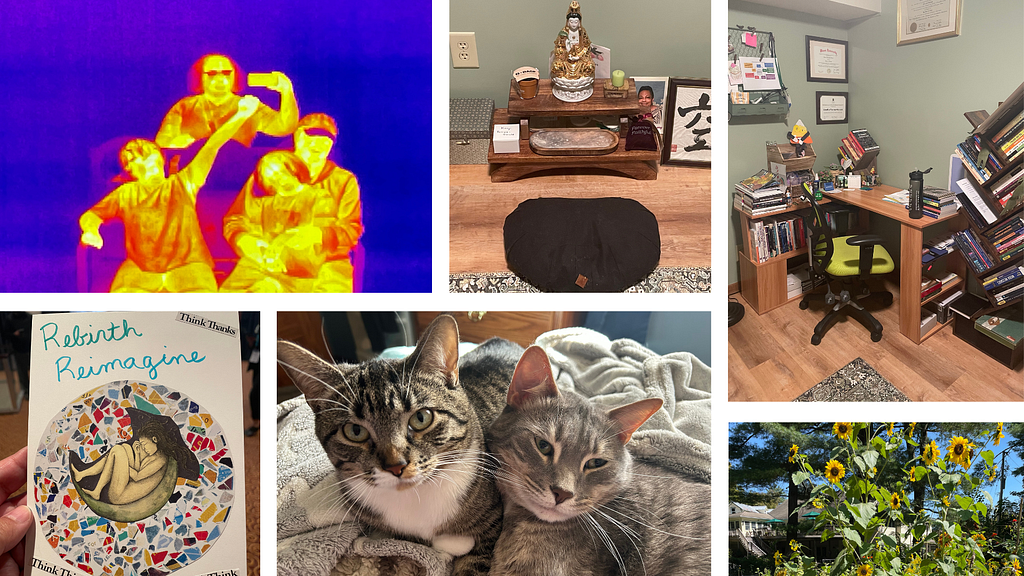
I am passionate about many things. I am passionate about my two children and two cats (shown above in the top left corner and bottom middle of the collage). I am also a mindfulness instructor who enjoys sitting meditation, somatics and trauma-informed practices. My meditation space is in my office and it has a cushion, dedications to loved ones, incense and Buddha (pictured above in the top middle of the collage). I also like to play online games and read. I self-identify as a book hoarder (photos of my office, with some of my books visible in the top right corner of the collage). I also enjoy collage making–a technique within my Contemplative CRiT Collage methodology to help mend trauma for disabled and able-bodied scientists of color (pictured above in the bottom left of the collage). Lastly, I love nature and appreciating beautiful, uncut flowers. At the bottom right of the collage above is a picture I took of sunflowers at a meditation retreat I participated in called the Radical Dharma Camp.
Are there other axes of identity that impact your life/STEM experience that you’d like to speak to (e.g. your religion, ability status, neurodiversity, etc.)? How do these additional axes of identity impact you as a woman/non-binary of color in STEM?
I identify as a disabled Latina, a daughter of a blind Latina, a mother of a child with a disability and a disability activist. My personal experience with disability has shaped my research; I am now looking at the intersection of race and disability in STEM education.
Being a disabled Latina mother-scholar has certainly impacted my life and my journey as a researcher in STEM and STEM education. I have published on this experience, drawing on intersectionality and DisCrit to share how my social identities influence my experiences with marginalization and oppression within a neoliberal university context.
I highlight the ways in which my impairment was “invisibilized” and minimized as the normal fatigue associated with motherhood.
I also note the role Latino communities play in the marginalization of disabled Latinas via disability avoidance and the gendered socialization process that makes Latinas feel obligated to sacrifice for their families and others. To read more, please check out my article Sobreviviendo Sin Sacrificando (Surviving without Sacrificing) — An intersectional DisCrit Testimonio from a tired mother-scholar of color.
You can find Dr. Lisette Torres-Gerald on BlueSky, Facebook and Linked-In
Thank you, Dr. Torres-Gerald, for allowing us to share your story! We’re honored to have you in our VanguardSTEM Village!
If you enjoy our weekly Community features, consider donating to our parent not-for-profit, The SeRCH Foundation, Inc., to help support this work.
Community Features: Lisette Torres-Gerald, Ph.D. (She/Her/Ella) was originally published in VanguardSTEM Conversations on Medium, where people are continuing the conversation by highlighting and responding to this story.